
In his sermon, “The Saint One With His Savior,” Charles Spurgeon paints a beautiful portrait of a faithful wife and a happy marriage. While his description mirrors the Christian husband and wife, it ultimately points to something even greater: the spiritual union between the believer and our first love and Savior, Jesus Christ. Our identity is found in Him, and like a devoted spouse, our greatest joy is to please our Savior in all that we do.
Spurgeon writes:
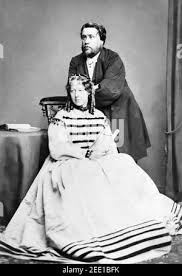 “… Sometimes we have seen a model marriage, founded on pure love, and cemented in mutual esteem. Therein, the husband acts as a tender head; and the wife, as a true spouse, realizes the model marriage-relation, and sets forth what our oneness with the Lord ought to be. She delights in her husband, in his person, his character, his affection; to her, he is not only the chief and foremost of mankind, but in her eyes he is all-in-all; her heart’s love belongs to him, and to him only. She finds sweetest content and solace in his company, his fellowship, his fondness; he is her little world, her Paradise, her choice treasure. At any time, she would gladly lay aside her own pleasure to find it doubled in gratifying him. She is glad to sink her individuality in his. She seeks no renown for herself; his honor is reflected upon her, and she rejoices in it. She would defend his name with her dying breath; safe enough is he where she can speak for him. The domestic circle is her kingdom; that she may there create happiness and comfort, is her lifework; and his smiling gratitude is all the reward she seeks. Even in her dress, she thinks of him; without constraint she consults his taste and considers nothing beautiful which is distasteful to him.
“A tear from his eye, because of any unkindness on her part, would grievously torment her. She asks not how her behavior may please a stranger, or how another’s judgment may approve her conduct; let her beloved be content, and she is glad. He has many objects in life, some of which she does not quite understand; but she believes in them all, and anything she can do to promote them, she delights to perform. He lavishes love on her, and, in return, she lavishes love on him. Their object in life is common. There are points where their affections so intimately unite that none could tell which is first and which is second. To watch their children growing up in health and strength, to see them holding posts of usefulness and honor, is their mutual concern; in this and other matters, they are fully one. Their wishes blend, their hearts are indivisible. By degrees, they come to think very much the same thoughts. Intimate association creates conformity; I have known this to become so complete that, at the same moment, the same utterance has leaped to both their lips.
“Happy woman and happy man! If heaven be found on earth, they have it! At last the two are so welded, so engrafted on one stem, that their old age presents a lovely attachment, a common sympathy, by which its infirmities are greatly alleviated, and its burdens are transformed into fresh bonds of love. So happy a union of will, sentiment, thought, and heart exists between them, that the two streams of their life have washed away the dividing bank, and run on as one broad current of united existence, until their common joy falls into the main ocean of felicity.”
This picture reminds me of the love shared between the Puritan Christopher Love and his wife, Mary—a love I have written about as one rooted deeply in their love for God: A Love Beyond the Scaffold: Mary Love’s Faith and Courage.
